Tuesday, July 31, 2012

Welcome to the 2011 Bind-O-Rama

The Bonefolder's annual online exhibition.

Artistically Reversible: Where Conservation and Art Meet

We are pleased to present Artistically Reversible: Where Conservation and Art Meet, the 2011 Bonefolder Bind-O-Rama. This online exhibited was inspired by the tenets of the Tomorrow’s Past (TP) movement that seeks to provide antiquarian books with new, conservationally sound yet innovative bindings. The UK-based movement has its roots 1999 with Sün Evrard and was in part inspired by the late Edgar Mansfield who wrote that “surely it is better to create tomorrow’s past than to repeat today’s.” As British binder Jen Lindsay wrote in 2007, “Why go on making books based on Then – copying outdated methods and conventions, instead of making books based on Now – applying current knowledge and practice with a modern sensibility.”

TP member Kathy Abbott, a binder and conservator acknowledges that the work of TP has created quite a bit of controversy: some book conservators think we are imposing our will onto the books and think we should be more invisible; book restorers think that we should be making bindings which imitate the period of which the book was printed and book artists seem to like our structures but see us as a bit ‘staid’. This Bind-O-Rama created similar controversy in the US perhaps due to a misunderstanding of both the outcomes and on a deeper level of conservation ethics which as expressed consider every book to be rebound or treated as a cultural heritage artifact. This latter conflict was discussed at length in Barbara Appelbaum’s paper that was presented at the 2011 American Institute of Conservation meeting and entitled Conservation in the 21th Century; Will a 20th Century Code of Ethics Suffice? <http://barbaraappelbaumbooks.com/wp-content/uploads/paper_aic_conservation.pdf>.

While many books are most certainly cultural heritage artifacts either as objects themselves or as part of the collection that holds them, many, the majority perhaps are use objects that have seen a great deal of handling and exhibit their age and provenance through the wear that is exhibited by their deterioration of materials and structure. It is these objects that TP seeks to give new life and a renewed significance whether for collectors or antiquarians. Conservation principles of doing no harm, reversibility (or as expressed by James Reid-Cunningham, conservator at the Boston Athenaeum retreatability) expressed by the use of proven materials with long-term stability, sound structure, and a skillful and respectful expression of craft married to innovation in structure and design. It is the latter which seems to touch the most sensitive nerve with concerns about “appropriateness.” Conservator Chela Metzger writes, “most conservation treatment discusses “appropriateness” or even used the word sympathy when describing a treatment goal. The original old part must meet and mingle with a “non original” new part. The meeting and the mingling must work well at every level. But this appropriateness and sympathy are hard to sum up. Appropriate to the text subject matter? Appropriate for the text paper qualities? Appropriate to the text time period? Appropriate for the owner of the text at the time of the binding?”

As Abbott says, “why can’t we make really, sound, conservation bindings, with a bit of structural ingenuity and a sensitive aesthetic too?” This theme was also echoed in a side-discussion at the Guild of Book Workers 2011 Standards of Excellence Seminar. That discussion featured several conservators and binders working in the US, both with cultural heritage collections and as binders in general. <http://bonefolderextras.blogspot.com/2011/10/discussion-of-tomorrows-past-at-guild.html>.

While the response to this Bind-O-Rama was lower than we hoped, we were very pleased to see conservators and binders take up the challenge. In reviewing the entries we asked “what treatments would disqualify entries from this exhibit? Ones that immediately strike one as hurtful to the text. Ones that do not use stable materials? Ones that require damaging the text to remove it from the new binding. Fortunately we found no evidence that disqualified entries, however we do encourage those interested to see that it is not about traditional “design bindings” or “restoration” but sympathetically innovative conservationally sound bindings.

We hope that binders and conservators will adhere to the highest standards of conservation materials and structure while keeping an open mind and willingness to consider the aesthetic and structural options for rebinding. A large part of that will be an ongoing civil dialog in which conservators continue to stress and share their best practices and we all pragmatically consider the options for rebinding a given book in full consideration of its value and historic significance whatever that may (or may not) be. Writes Abbott, “I do hope that in the future, books bound in this way will be as accepted as every other binding style,” and “I think it could become the most exciting and challenging concept that has come out of the world of bookbinding for a long time.”

Comments by Kathy Abbott of Tomorrow's Past and The Bonefolder editorial staff.


Monday, July 16, 2012

Bookbinding: A Step by Step Guide

Kathy Abbott. Bookbinding: A Step by Step Guide. Ramsbury: Crowood Press, 2010. 10.2 x 8.5 inches. 160pp. ISBN-13: 978-1847971531 (hardcover) $29.95.

Reviewed by Anna Embree

Kathy Abbott's book Bookbinding: A Step by Step Guide is a well organized, clearly written manual on bookbinding that fills a much needed gap in the literature that is currently available to book binders about the tools and techniques of the craft. There are certainly flaws in this guide, as there are in every such guide, and it must be noted that this book may be particularly useful for more experienced binders and bookbinding instructors rather than beginners. However, the detailed instructions Abbott provides, coupled with clear photographs and diagrams make this a potentially useful bench manual and a valuable resource.

The book is divided into four chapters containing introductory information about materials, tools and supplies, and nine project descriptions. An appendix provides supplementary information, a glossary and a list of suppliers. In the chapter on materials and tools, the author clearly describes the equipment and supplies needed to outfit a functional bindery. She provides photographs of the items and an explanation of the ways each tool is used.

The chapters containing descriptions of projects are also laid out in a very logical format with step-by-step instructions and additional information about history and practice. The numbered instructions are coded in red to indicate an accompanying photograph, and this little key is very helpful for staying on track with the text. Also provided are boxes with supplemental text that give background information about the techniques that are described.

Despite the careful consideration put into the layout of this book and the wealth of information therein, the book suffers from the serious drawback of trying to appeal to too wide an audience. In the introduction the author asserts that the book is aimed at complete beginners, with the idea that they will be working at home. However, the beginner would be hard pressed to have a fully stocked and equipped bindery and - although she states that the tools and supplies she lists can be easily replaced with other, more available supplies - a beginner would have great difficulty doing this as they would not have the experience to know where to turn. In fact, it takes a strong understanding of procedure in order to see the best ways to make substitutions and yet attain good results. Further, the chapter on tools and materials, though very extensive, does not go far enough in explaining the importance of these items to the craft. For example, the section on grain direction clearly illustrates how grain can be determined in various materials but says very little about why grain direction is so important, both in the construction process and in a finished book.

Most of the projects in this book are also not really at the level of an absolute beginner. Many of the techniques covered in the projects would be difficult for someone absolutely new to the craft to accomplish from instructions alone. Rounding and backing, for example, is a very complex topic and, especially without an understanding of, or access to the proper equipment, would be hard to execute with any degree of success. The same is true for modifying equipment for leather paring and the leather paring techniques. Further, the description of the sewing structures for the book projects may be clear only to someone with some experience. These descriptions would benefit from accompanying diagrams to provide a clearer picture of the sewing patterns.

A section on basic techniques would also be extremely useful for the reader and would improve the overall coherence of the text. Processes such as gluing out, tipping on end sheets, and adhering turn-ins are described multiple times throughout the text, and the instructions would have been easier to follow had all of the information about each of these procedures been listed in one location. In fact, the book continually addresses simple concepts with repetition but glosses over some of the more complicated techniques. While the goal may be to provide something for everyone, I fear that this may make the book less than satisfactory for binders of all levels. As a teacher I believe that repetition can be very useful for reinforcing concepts, however the repetition within the step-by-step format creates a lot of duplicate information. A section on basic techniques would allow the beginner to refer back to these directions as often as necessary without forcing the more advanced binder to read through the fundamental instructions again and again.

Regardless of the limitations of this book, it does contain a great amount of information and is a truly practical bench guide. The repetition found in the first few chapters decreases somewhat as the book progresses, and the value of the content makes up for the inconvenience of replication in the instructions. Importantly, the projects are interesting and are all grounded in traditional craft. The straightforward descriptions of techniques are an excellent resource for any binder with a solid foundation in the craft but little overall experience, and for any advanced binder interested in reviewing procedures or seeing how another binder approaches the work.

While this book may have limited use as a manual for beginners working on their own, it is an ideal resource for the classroom. Much of the difficulty a beginner might face working through this book alone, could be easily overcome with some knowledgeable assistance. One of the greatest assets of the book is the huge number photographs that accompany the text and the strong organization of these images with the step-by-step descriptions. There are very few books on bookbinding that illustrate binding techniques so clearly; and students who have seen binding demonstrations, but are not yet confident in their skills, will find this book instructional and informative. It is a huge accomplishment to put together a manual of bookbinding that covers traditional practice in such detail and with such clarity. This is a book I can confidently recommend as a solid resource for bookbinding instruction.


Anna Embree has been teaching bookbinding for the MFA in Book Arts Program since August 2003. She came to the University of Alabama from Iowa City where she was associated with the University of Iowa Center for the Book. She has worked as studio coordinator for the Penland School of Crafts in North Carolina and in conservation at the University of Iowa Libraries. Ms. Embree received a Bachelors degree in Art from the University of Iowa in Iowa City. She received a Masters degree in Textiles and Clothing from Iowa State University in Ames, and a Graduate Certificate in Book Arts and Technologies from the University of Iowa Center for the Book. In addition to these degree programs, Ms. Embree completed a four-year apprenticeship in Bookbinding and Rare Book Conservation at the University of Iowa Libraries. She taught bookbinding at the University of Iowa from 1998–2003. Ms. Embree is active in the Guild of Book Workers and a Co-director of Paper and Book Intensive.

Discussion of Tomorrow's Past at the Guild of Book Workers Standards of Excellence Seminar, 2011

Welcome to this discussion of the issues surrounding the Tomorrow's Past movement and the Bonefolder's Bind-O-Rama 2011 - Artistically Reversible: Where Conservation and Art Meet in which we invited binders and conservators to explore the movement's tenets of providing new, conservationally sound clothes to old books. For more context please see the article in The Bonefolder, Vol 7, by Charles Gledhill, the Tomorrow's Past web pages, and this post at the Riverlark blog entitled Old wine in new bottles.

This discussion on Friday, October 7 was organized by Karen Hanmer, bookbinder and book artist from Chicago, to take advantage of the presence of many interested parties at the Guild of Book Workers annual Standards of Excellence Seminar being held at Boston's Park Plaza Hotel. The discussion was started by Karen who (re)introduced Tomorrow's Past, and the concerns that were being voiced by some about its ethical implications. These concepts were also discussed by Barbara Appelbaum in her paper from the 2011 AIC annual meeting entitled Conservation in the 21th Century; Will a 20th Century Code of Ethics Suffice?

Also present were: Eric Alstrom, collections conservator at Michigan State University Library; Anna Embree of the Book Arts Program at the University of Alabama; Deborah Howe, collections conservator at Darmouth College Library; Chela Metzger, senior conservator of library collections at the Winterthur Museum; Suzy Morgan, conservator in private practice via Skype from Chicago; Nancy Nitzberg,  conservator in private practice in the Philadelphia area; James Reid_Cunningham, conservator at the Boston Athenaeum; Peter Verheyen, head of conservation and preservation at Syracuse University Library; Stephanie Wolff, conservation technician at Dartmouth College Library

These participants represent binders and conservators from variety of training and work backgrounds. We hope you will find this discussion thought provoking and welcome discussion of your comments and concerns.

Download the mp3 audio file of this discussion 

Edit 11/14/2011 Kevin Drieger on his Library Preservation 2 blog shares his thoughts continues to the discussion in a post entitled Finding the Conservator in Conservation>.
While I think the idea of the invisible conservator is impossible and wrong and should not be a goal, I also do not advocate for a conservator’s self-expression free-for-all. This issue of how much of our selves do we put in our work must always be held in thoughtful and professional tension.

The author, the binder, the seller, the conservator, and the reader are all part of the community that creates and interprets our written cultural heritage. Understanding who these various members are only helps deepen our understanding of this heritage.

Wednesday, July 4, 2012

2012 Bind-O-Rama Entry Form - Now Online

Below the entry form for the 2012 Bind-O-Rama (not to be confused with the Bonefolder Bind-O-Rama, but yet a continuation of the tradition).
The Book Arts Web annual online exhibition on
The Bone Folder, by Ernst Collin

We are pleased to present The Bone Folder, by Ernst Collin as the 2012 Book Arts Web Bind-O-Rama. This year's event will be a set book affair with participants being asked to bind the same text.


Translated by Peter D. Verheyen as The Bone Folder, Der Pressbengel (1922), is Collin’s best-known work, and first republished in 1984 by the Mandragora Verlag and later translated into Italian as Dal Religatore d’Arte (1996). Conceived as a dialogue between a bibliophile and a master bookbinder on all aspects of the bookbinding craft as well as specific techniques, the original German has a charming if somewhat pedantically formal “school primer” tone, in keeping with the time in which it was written. The question-and-answer format has long history in pedagogical texts, whether for religious catechisms or trades, as in Friedrich Friese’s Ceremoniel der Buchbinder (1712), which introduces the reader to all aspects of the bookbinding trade and its traditions. 

Throughout the work, Collin himself is very frank in addressing the conflicts between quality and cost, as well as the positive and negative impacts of “machines” throughout the work. In his introduction to the 1984 reprint of Der Pressbengel, Gustav Moessner, author of and contributor to several German bookbinding texts, states that he sees the Collin’s work in part as a reaction to the growing industrialization of the bookbinding trade and the loss of the skills and techniques connected with this industrialization. In many respects this trajectory continues today, accelerated by the decrease in formal bookbinding apprenticeship opportunities, the increasing simplification of structures, changing aesthetics, and ultimately changes in the perceived value of books and the general economic climate of Weimar Germany.

The text can be downloaded in PDF form, laid out in 7 signatures of 8 pages (sample pages below) each from the Pressbengel Project from the left menu on that page. Bindings can reflect the typical German trade and fine binding styles described in the text, those of other national traditions, or innovative interpretations of these traditional styles. Tutorials to structures in the German tradition can be found here.

More information and page samples can be found here.


Thursday, June 21, 2012

Bind-O-Rama 2011 - Artistically Reversible: Where Conservation and Art Meet

Welcome to the 2011 Bonefolder Bind-O-Rama that demonstrates the intersection of conservation and the art of the book. We challenge binders and conservators to think about their work in different ways and to create compelling new work that applies “non-destructive and completely reversible book structures.” Since 2003, the Tomorrow’s Past movement (See The Bonefolder, Vol. 7, 2011) has led the way with work that demonstrates a high regard for the integrity of the original object, the application of current conservation best practices, and an innovative interpretation of book structure and aesthetics resulting in work that is lasting and fresh.

The integrity of the original is a key value of this movement, and stresses that books are not rebound or interpreted simply for the sake of doing so. Books of significance as artifacts with key elements of the binding in treatable condition or requiring simpler treatments are not appropriate candidates for this kind of treatment. Suitable books would be those that may have boards or other elements missing, have been previously repaired/rebound and showing the negative effects of those treatments, or whose original structures may have caused the breakdown of the binding in the first place. All treatments completed for this Bind-O-Rama must conform to current best practices in conservation, be reversible, and ultimately “do no harm.” This is NOT an altered book event. In contrast to past Bind-O-Ramas this event will be juried by the members of The Bonefolder’s board who are themselves trained conservators and active in the field. Kathy Abbott, a member of the Tomorrow’s Past movement will also participate as juror.

For ideas and more context please see the article in The Bonefolder, Vol 7, by Charles Gledhill, the Tomorrow's Past web pages, and this post at the Riverlark blog entitled Old wine in new bottles.

Additional examples can be found by Suzy Morgan, Gaylord Intern in the Conservation Lab at Syracuse University Library. In her posts she discusses the book she treated and some of the "ethical" questions. Take a look at these links: http://digitalcellulose.wordpress.com/2011/08/16/internship-report-month-1-part-2-now-with-more-coffee/ and http://www.flickr.com/photos/suzypictures/sets/72157627145298417.

Another example is the work of James Reid-Cunningham, conservator at the Boston Athenaeum. His treatment is at http://www.reid-cunningham.com/Design%20Bindings/insectarchitectu.html.

Karen Hanmer's example is at http://www.karenhanmer.com/gallery/piece.php?gallery=newwork&p=Walter_Crane.


To participate, please select the book you will treat/rebind carefully, keeping at the forefront the needs of book and your skills as a binder and/or conservator. Each entry must include:
  • Images: At least two, no more than 5 images of treatment including before, in-process, and completed. 
    • Specifications: Minimum 640 x 480 pixels @ 72dpi, jpg file format of your book. Files must be named as binder's name-1.jpg... (e.g. verheyen-1.jpg, verheyen-2.jpg) 
      • Examples below provided by Kathy Abbott.
  • Condition Report: please follow structure/syntax of example provided.
    • E.g.: Samuel Butler, Hudibras (London 1817). Bound in full leather; front board and parts of spine missing; text block sound with marbled edges.

      Hudibras (before, front board missing)
      Hudibras (before, front board missing)
      In process
  • Treatment Report: Includes statement of why the illustrated treatment was selected, description of selected structure, and aesthetics (please follow structure/syntax of example provided)
    • E.g.: Adapted ‘simplified binding’. Original sewing retained; spine lined with linen and hand-made paper; new endpapers of plain hand-made paper (to match the original); decorated, hand-made paper spine and hand-coloured, hand-made paper over hand-made paper pasteboards. 133 x 77 x 24mm. Bound in 2010.

      Hudibras (completed)
  • Brief Bio Sketch: of that includes training in binding/conservation (no more than 250 words)
    • Kathy Abbott served a four-year apprenticeship in bookbinding and then gained an HND from the London College of Printing, followed by a BA (Hons) from Roehampton University . She is currently self-employed as a bookbinder and book conservator and is a partner of Benchmark bindery, set up in 2009 with Tracey Rowledge. Kathy teaches bookbinding at the City Literary Institute and West Dean College and conducts many workshops across the UK. She has been exhibiting with the group Tomorrow's Past. since its formation in 2003.
  • Brief Treatment Statement: How this treatment approach impacts you and your work. (no more than 100 words)
    •  I create new structures which are sensitive to the needs of antiquarian books. They use little or no adhesive and are fully reversible. The inspiration for the colours used in the covers comes from those found on or within the original text-block.
All Images must be sent to <bonefolder@philobiblon.com> at the time the entry form is submitted.

Actual online entry form will be added here during the summer.

Deadline for entries Oct 31, 2011.

Monday, June 18, 2012

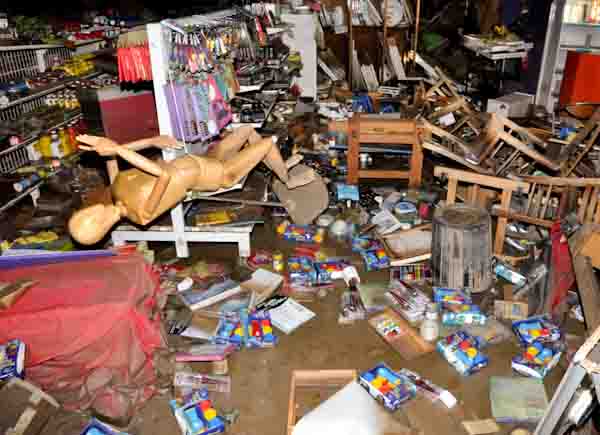
Floods in Queensland, Australia - From Adele Outteridge

We are all very relieved that the Artists' Books Collection at the State Library of Queensland is safe and look forward to the its reopening.


The Studio West End (Wim de Vos and Adele Outteridge) is dry and back to business. The water came to the front gate of the old ice cream factory site where we are housed. Not so lucky were so many other residents and businesses in West End, CBD and suburbs of Brisbane. The devastation and heartbreak are hard to comprehend.

I was marooned at home with our street flooded in both directions from Moggill Creek. We had no power for five days so were spared the harrowing images that saturated all television channels. The water came into one lower room but not the main part of our house. We have a few wet books and some old stored stuff. We were very lucky compared with neighbours whose houses went under.

Below some photos I sent to Peter for the Bonefolder Extras blog.

West End, the Art Shed

West End, the Art Shed

West End, mud

West End, Melbourne St.
South Brisbane, more mud
Kenmore, raining again
Kenmore, young Tawny Frogmouth
West End, before the storm
Cyclone Yasi.

Thanks to all who have sent messages of support.

Adele Outteridge

Adele Outteridge Wim de Vos
Studio West End
http://www.studiowestend.com

Tuesday, June 12, 2012

Index to The Bonefolder, Volumes 1 - 7, 2004 - 2011 now online

An index to Volumes 1 - 7, 2004 - 2011 is now online at the main Bonefolder website.The index is due to the efforts of Samantha Quell, longtime Bonefolder reader and currently a student in the MLS program at the State University of New York at Buffalo.Thank you Samanatha!


Click cover to read.